
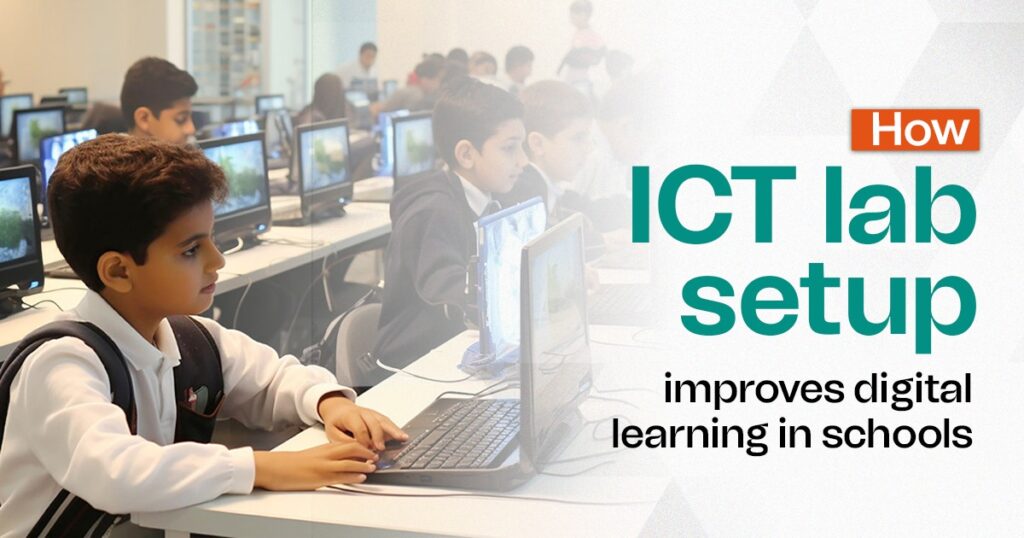
Digital learning isn’t even something we are expecting in the future. It’s already in schools in the form of smart classrooms and digital tools. But schools can elevate the digital learning experience even more with a well-planned ICT lab setup. An ICT lab isn’t your usual computer lab. Implemented correctly, it can cover research-based learning, multimedia-based concept understanding, coding & logical thinking, collaborative digital projects, and data handling & presentations. In this blog, we’ll understand what improvements ICT labs bring to the school’s mission of digital learning.
What Is an ICT Lab?
It is a dedicated learning space equipped with:
- Computers or devices
- Internet connectivity and networking
- Educational software and platforms
- Structured ICT curriculum
- Teacher-led digital instruction
It differs from traditional computer labs in the sense that it is not focused on basic software usage, usually an extension of the computer-equivalent subject. A modern ICT lab integrates technology directly into learning outcomes across subjects in the curriculum.
Why ICT Labs Are Essential for Digital Learning
Just introducing tools and technology doesn’t count as digital learning. ICT labs provide schools with a controlled, guided environment offering:
- Equal access to technology for all students
- A distraction-free digital learning space
- Structured exposure to digital tools
- Measurable learning outcomes
Digital learning without an ICT lab is like climbing a floor without knowing where the stairs are and what their path is.
How ICT Lab Setup Improves Digital Learning Outcomes
- Better conceptual understanding: Visual simulations, educational videos, and interactive presentations help teachers explain complex topics to students in a method that improves the comprehension and retention of subjects like science, mathematics, and geography.
- Strong digital literacy from an early age: ICT lab sessions help students acquire basic computer skills early on, which candidates often delay until later in their academics. These include abilities like keyboard and computer handling skills, online research methods, document creation and presentations, and responsible internet usage.
- Project-based and experiential learning: ICT labs aren’t focused on theoretical coverage. In ICT learning, students hop from project to project, which builds their independent thinking and problem-solving abilities. These projects require students to create presentations/reports, conduct online research assignments, collaborate on group tasks, and perform digital storytelling and data analysis.
- Personalized and self-paced learning: ICT doesn’t force students to learn a particular way or in restricted timelines because it’s different from traditional education. With easy progress tracking and customized learning paths available, teachers can enable students to learn at their own pace with no one being left behind.
- Improved teacher effectiveness: With ICT, teachers are empowered with the ability to deliver engaging lessons using digital assessments and provide real-time feedback. This makes classroom management more efficient, leading to better classroom performance and higher teacher confidence.
ICT Labs as the Foundation for STEM and Robotics
Another indirect way ICT improves digital learning in schools is that it empowers the second element of digital learning: STEM. Think of ICT as the base layer for advanced technology education, where students further progress toward:
- Coding and computational thinking
- STEM education in schools
- Robotics education and automation concepts
- AI-based learning modules
Basically, schools that are focusing on ICT-enabled curriculum now will witness a smoother transition to STEM-based learning. Choosing a provider that is both an ICT and robotics education provider in India will be a strategic move in a connected, long-term learning roadmap.
Conclusion
ICT is no longer an option for schools. If digital learning is one of your school’s primary goals, ICT is a must. You can start simple: a reliable computer system, ICT software, lesson plan, teacher training, tech support, and scalable infrastructure. An introductory ICT lab like this can improve academic understanding, build digital confidence, and help students advance in STEM, robotics, and AI. Consider an ICT education provider in India for a structured lab setup and make your institution future-ready.
